tattoos
Showing posts with label Rabies. Show all posts

Sunday, February 20, 2011

CONSTIPATION, SLEEP PARTNERS, AND SCOTTISH DEERHOUNDS....

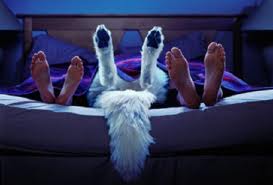
By now, Helpful Buckeye suspects that all of our pet-owning readers are aware of the numerous news reports about the "dangers" of allowing your pets to sleep in your bed with you.  The only reason we haven't included this discussion in Questions On Dogs and Cats is because Helpful Buckeye figured you all could draw your own conclusions about the reports.  Well, a few e-mails did show up asking, "Should I be concerned about my pet sleeping in my bed?" 

First of all, this is something that has probably been going on since early humans shared their animal fur sleeping robes with their camp dogs.  Common sense probably didn't play a big part in those early decisions but it surely must in today's world.  Perhaps Helpful Buckeye is giving pet owners too much credit...perhaps not.  No matter how much publicity this topic receives, Helpful Buckeye supposes that most of you will simply keep on doing what you've been doing...either allowing your pets to sleep in your bed or not.

The American Animal Hospital Association has weighed in on the matter and this is their offering:

AAHA advises wellness care for pets that share the bed

AAHA Executive Director Michael Cavanaugh, DVM, tells pet owners that regular wellness care is the key to sleeping safely with pets.

A video on the HealthyPet YouTube channel supports the University of California-Davis report that discusses the risk of zoonoses from sleeping with pets and puts it into context.  Go to: http://www.youtube.com/user/AAHAHealthyPet#p/a/u/2/pMvG48l-iTw

Cavanaugh says despite pet owners learning about the information in this study, AAHA knows they won’t kick the pets out of bed.

He admits that at least two of his pets (including two cats and a dog Zoe, who co-stars in the video)sleep on the bed every night (and will continue to do so!).

He encourages pet owners to take their pets for regular wellness checks, which will reduce the risk of problems described in the study.

Only 10% of responders said they get at least some of their pet medicine on line.  Hopefully, they haven't had any problems with those prescriptions.  75% said they have had a dog diagnosed with cataracts.  And, 25% of you have tried to grow catnip.  Just so you talked about it with your cat!  Be sure to answer this week's poll questions in the column to the left.

CURRENT NEWS OF INTEREST 

1) It has been confirmed that a cat in Wisconsin has tested positive for the H1N1 influenza virus, more commonly known as "Swine Flu."  It and another sick cat in the same household were euthanized since they weren't responding to treatment.  Here's a short review of this concern:  http://www.avma.org/public_health/influenza/new_virus/default.asp?utm_source=smartbrief&utm_medium=email
2) A Scottish Deerhound won the title of Best in Show this past week at the Westminster Dog Show.  Everyone who watched the proceedings seemed to fall in love with Hickory.  More at: http://www.pawnation.com/2011/02/15/the-2011-westminster-dog-show-winner-is/?icid=main%7Chtmlws-main-w%7Cdl3%7Csec1_lnk3%7C201602

DISEASES, AILMENTS, AND MEDICAL CONDITIONS

Constipation is one of the 8 most common aging dog considerations.  In most cases, constipation associated with aging is due to the changes in digestive patterns of the older dog as well as changes in the amount of physical activity the dog gets.  Of course, constipation in general can be a problem for dogs of any age and the resolution of it will involve controlling the things you have control over...regardless of the age of your dog.

A brief discussion at this point of the causes, treatment, and control of constipation will benefit all dog owners.  Constipation is a common clinical problem in dogs and cats. In most instances, the problem is easily rectified; however, in more debilitated animals, accompanying clinical signs can be severe. As feces remain in the colon longer, they become drier, harder, and more difficult to pass.

Causes

Chronic constipation is most common and is due to the inability to pass poorly digestible, often firm matter (eg., hair, bones, litter) mixed with fecal material. The lack of water intake or the reluctance to defecate on a regular basis due to environmental (stress) or behavioral (dirty litter box) situations predisposes to the formation of hard, dry feces. Some medications promote constipation via differing mechanisms.

Peristaltic waves are responsible for the normal movement of fecal material in the colon. Giant migrating waves that occur intermittently throughout the day move this matter farther and more rapidly. These waves are common after ingestion of a meal. A reduction or loss of this wave activity may contribute to constipation. Diet is the most important local factor affecting colonic function.

Signs

The classic clinical signs are straining to defecate and frequently the passage of firm, very dry feces. If the passage of feces is hindered by an enlarged prostate (usually in older, un-neutered male dogs), the feces may appear thin or “ribbon-like” in appearance. Passed feces are often quite putrid. Some constipated dogs will show signs of lethargy, depression, loss of appetite, vomiting, and abdominal discomfort.

Diagnosis

A history of dietary indiscretion and physical evidence of retained feces confirms the diagnosis. Abdominal palpation and rectal examination, including evaluation of the prostate, should be performed. Plain abdominal X-Rays may help establish the inciting factor(s) of fecal retention and give some indication of what the feces contain (eg., bones).

Treatment and Control

Affected animals should be adequately hydrated. Mild constipation can often be treated by dietary adjustment consisting of avoidance of dietary indiscretion, ready access to water and high-fiber diets, and the use of suppository laxatives. Continued or longterm use of laxatives should be discouraged unless absolutely necessary to deter constipation.

In more severe cases, retained feces must be evacuated using enemas or manual extraction while under general anesthesia. Complete removal of all feces may require 2-3 attempts over as many days. Concurrent fluid and electrolyte abnormalities should also be corrected.  To prevent recurrence, animals are encouraged to eat high-fiber diets, ready access to water should be maintained, and frequent opportunities to defecate allowed.

As your senior dog ages, you should initiate a consultation with your veterinarian if the dog starts to show
signs of straining to defecate.  With your veterinarian's help, you should be able to come up with a plan that will fit your dog's life style and resolve and/or prevent any constipation problems.

BREED OF THE WEEK

Of course, the breed in the spotlight this week is the Scottish Deerhound...courtesy of the Westminster Dog Show.  Resembling a larger, coated Greyhound, the Scottish Deerhound is a keen and alert sight hound, seen often in lure coursing events and the show ring. One of the oldest breeds, the Deerhound possesses a preeminent hunting ability. The hair on the body and neck is harsh and wiry, while the coat on the head, breast and belly is much softer. Coat colors include blue gray, gray, brindle and black, among others.

A Look Back

Known centuries ago as the Scotch Greyhound, Rough Greyhound and Highland Deerhound, the Scottish Deerhound became a clearly identified breed in the 16th and 17th centuries. He was the best breed to use for the pursuit and killing of deer, and at the time, could be owned by no one of rank lower than an earl. These exclusive ownership rules nearly led to the breed’s extinction until breeders revived the Deerhound in the early 1800s.

Right Breed for You?

While he possesses a quiet and dignified personality in the home, the Scottish Deerhound may try to chase any furry animals that run past him. For that reason, the breed should be exercised on leash or in a fenced area. Although he enjoys his family, his size may be intimidating to smaller children. The breed’s crisp, somewhat wiry coat, however, is exceptionally easy to care for, requiring only brushing and occasional bathing.
  • Hound Group; AKC recognized in 1886.
  • Ranging in size from 75 to 110 pounds. 
  • Deer hunter.
PRODUCTS OF THE WEEK

Pet owners often feel that the house's four-legged residents really run the place, and the humans are just guests. If you find yourself continually stepping on squeaky toys or wondering where the leash went, you're not alone. Unless your pet is that rare breed who understands more than 1,000 words and obeys commands to put away all her toys, you may feel that your pet's clutter is out of control. Our friends at Zootoo rounded up some of their favorite products to organize your pet gear and reclaim your home.  Check these out at: http://www.pawnation.com/2011/02/17/zootoo-review-4-solutions-for-controlling-pet-clutter/

GENERAL INTEREST

1) A dog was bitten by a rabid javelina near Prescott last week, about 100 miles SW of Flagstaff.  Just a reminder that rabies is still around and can be transmitted by an otherwise seemingly innocuous animal.  For the whole story, go to: http://www.azcentral.com/news/articles/2011/02/18/20110218yavapai-rabid-javelina-dog-abrk.html

2) Dog owners end up walking more than 23,000 miles -- almost as far as walking around the world -- with their pet during its lifetime, a new study has found.  This study was done by an insurance company in England and they came up with some really interesting facts.  Enjoy reading: http://ibnlive.in.com/news/dog-owners-end-up-walking-almost-around-the-world/143047-19.html  ...then, go out and walk your dog!

3) Myth: Cats seek out people who hate cats.

Truth:  It can seem that way. A cat lover's admiring stares and "kitty, kitty, kitty" calls can be off-putting. So in a crowded room, a cat often seeks the only person ignoring her. Besides, cat lovers may already smell like strange cats, so she'll be more attracted to the cat-free-zone human.

4) Just a bit of humor for the week (contributed by my former partner):


SPORTS NEWS

College basketball has reached that stage at which even the top teams are finding ways to lose a game here and there.  Pitt lost yesterday on a buzzer-beater to St. Johns, a team that has beaten 5 teams that were in the top 13.  Texas, Kansas, and Ohio State, the teams ahead of Pitt, also lost this week.  This should make for a very interesting NCAA basketball tournament.

PERSONAL STUFF

After not getting any snowfall for 8 weeks, we got a decent snowstorm yesterday and today.  To this point, Helpful Buckeye has shoveled 22" of the white stuff from this storm.  It keeps things interesting this time of the year.  Perhaps conveniently so, Desperado and Helpful Buckeye are heading south into the desert portions of Arizona tomorrow morning to check out a part of the state we have not seen before...the middle portion of the Colorado River valley.  Then, we'll head over to Scottsdale to stay a couple of nights with good friends Judy and Dave.  With them, we'll be hiking some of the trails in the McDowell Sonoran Desert Preserve.

Desperado and Helpful Buckeye will be living the words of Margaret Lee Runbeck as we make our way this week: "Happiness is not a station you arrive at, but a manner of traveling.  Being happy while moving toward a goal is just as important as reaching the goal." 


Helpful Buckeye saw several more bald eagles this week...such majestic birds!


~~The goal of this blog is to provide general information and advice to help you be a better pet owner and to have a more rewarding relationship with your pet. This blog does not intend to replace the professional one-on-one care your pet receives from a practicing veterinarian. When in doubt about your pet's health, always visit a veterinarian.~~

Sunday, October 17, 2010

DOGS THAT DIG, VITAMIN D TOXICITY, AND ONLINE DRUGS....

Well, apparently, having a dog roll in something "yucky" doesn't upset a pet owner as much as having the dog eat feces...coprophagia, as discussed a few weeks ago.  Helpful Buckeye did, however,  receive several e-mails about different "yucky" things dogs had rolled in...a decaying turkey carcass, mildewed/decomposing leaves, and a pile of old rags that had been used to clean up after a septic tank clean out.  Most of you still felt that coprophagia takes the cake..."figuratively" speaking.  We'll deal with one more habit this week that most dog owners don't like very much...although, we'll let you determine if it's really a "nasty" habit.

Helpful Buckeye finished the 4th leg of his Quadathlon of Northern Arizona this past week, with a long hike in the Grand Canyon.  More on that later in this issue....


Not as many respondents said that their dogs ever rolled in something "yucky"...only about 66% have enjoyed that fun.  On the question of how many cats is too many, 75% of you said that 6-10 was too many and the rest were divided between "even one" and 2-5.  Helpful Buckeye suspects that confirmed dog lovers were responsible for the "even one" responses.  Be sure to answer this week's poll questions in the column to the left.

CURRENT NEWS OF INTEREST

1) The ASPCA has posted this warning about purchasing drugs for your pets online:

Although it may be tempting and convenient to order your pet’s medications online, the U.S. Food and Drug Administration (FDA) has issued a warning to pet parents about unregulated online pharmacies that sell expired or counterfeit drugs without a prescription. According to the FDA, foreign and domestic web pharmacies may ask pet parents to fill out an online form and then falsely claim that a veterinarian will evaluate the pet’s condition to prescribe the appropriate treatment.

To read the rest of the details in this warning, go to: http://www.aspca.org/news/national/10-08-10.html#2

2) The American Animal Hospital Association has released this information from the CDC about human death from rabies: http://www.aahanet.org/trendstoday/VetNewsArticle.aspx?key=8d867d62-71c4-4166-ae04-fba3fb789ae8

Even though not very many people in the USA die from rabies, it's important to understand the ramifications of this horrible disease and why it is so imperative to have your pets vaccinated against rabies.

DISEASES, AILMENTS, AND MEDICAL CONDITIONS

The notice in last week's issue of Questions On Dogs and Cats that warned of Vitamin D toxicity from a brand of pet food warrants more information about this serious disease process.

What Is Hypercalcemia?

Hypercalcemia (higher than normal amount of calcium in the blood) is a serious electrolyte abnormality caused by excessive exposure to or ingestion of vitamin D. Symptoms of vitamin D toxicosis, which can affect multiple organ functions, usually occur within 24 to 72 hours of ingestion and include loss of appetite, vomiting, diarrhea, increased thirst and urination, depression and weakness. Initially, clinical signs may be vague and nonspecific.

Excessive amounts of vitamin D in an animal’s bloodstream can increase calcium and phosphorus levels within 12 to 24 hours after initial exposure and persist for days and weeks. As calcium and phosphorus levels rise, they can affect the kidneys as well as the heart, gastrointestinal tract and the central nervous system. Acute kidney failure, coma and death can occur in severe or untreated cases.

What Is the Treatment for Hypercalcemia?

Treatment goals include lowering serum calcium and phosphorous levels and managing accompanying kidney failure, and may require aggressive supportive care for days or weeks. The ASPCA recommends the following treatment guidelines for treating hypercalcemia in animals:

• Stabilize the animal first—control seizures if present—before implementing specific treatment.
• Monitor serum calcium, phosphorus, and kidney values. A complete blood analysis is recommended especially in very young or elderly animals or animals with preexisting health problems.
• Run fluids to the affected animal at twice the maintenance rate, until calcium drops to baseline levels. High doses of diuretics (medicines to increase the volume of urine produced) may be needed for several days.
• Feed animals a low calcium diet during the course of treatment.
• Continue to monitor the animal for long-term health problems associated with organ calcification.

Diagnosis will be based on history of exposure to high levels of vitamin D, presence of higher than normal levels of calcium and phosphorus in the blood, kidney failure and high levels of vitamin D in the food. Incriminated food samples for vitamin D analysis should be properly labeled and kept refrigerated until they are sent to a laboratory for analysis. A complete necropsy (animal autopsy) should be requested if an animal dies of suspected vitamin D toxicosis.

NON-MEDICAL CONCERNS 

Anyone who has had a dog that liked to dig holes in the yard will tell you it is no fun trying to not only fill all the holes but also to attempt to break the dog of the habit. 

From PawNation.com comes this advice:

Meet Mary Burch, American Kennel Club Canine Good Citizen Director and Paw Nation's expert columnist addressing your questions on animal behavior. Dr. Burch is one of fewer than 50 Certified Applied Animal Behaviorists based in the United States. She is the author of 10 books, including the new official book on the AKC Canine Good Citizen Program, "Citizen Canine: 10 Essential Skills Every Well-Mannered Dog Should Know."


Dear Mary,

Could you tell me why dogs dig and how I can keep my pooch from ripping my flower bed apart? Thanks!

Dogs can make a minefield out of your yard for a number of reasons:

They're Bored: Left alone in a backyard, some dogs dig as an outlet for frustration. Digging provides something to do when an active, intelligent dog is bored out of his mind. Confined dogs will also often dig to get under a fence. There's a big wide world out there and the dog wants to see it.

It's In Their Genes: Some breeds -- terriers in particular -- are go-to-ground dogs who dig to find moles, lizards, mice, bugs, and any other critters in the hunt of the day. So they are doing what they feel genetically compelled to do.

To Cool Off: Dogs who are outside in the heat will dig to expose cool earth that they can lay on to lower their body temperatures.

For Storing Treasure: Dogs who like bones often bury them for safekeeping and to dig up later.

If you better understand why your dog has this habit, you will have more ideas about how to handle it. For example, the best thing you can do for a bored dog is provide mental stimulation through daily play and training sessions. The AKC Canine Good Citizen Program is a great place to start training all dogs and owners.  This program is described at: http://www.akc.org/events/cgc/program.cfm

You can also manage your own frustration -- and focus your dog's desire to dig -- by designing a digging pit in your yard so there is a designated place for your dog to tear into. If you bury bones there for him to sniff out, it will help your dog learn that this place is an approved digging area.

Finally, in warm weather, bring your dog inside so that he doesn't have to handle the heat on his own. If you don't want to give your dog access to your whole house while you're gone, a designated climate controlled area with water and toys will be much appreciated by the canine member of your family.

GENERAL INTEREST

1) In last week's issue, Helpful Buckeye offered a quiz about unusual breeds of dogs.  This week, you can find out how much you really know about cat breeds, their markings, etc,...courtesy of the Cat Fanciers Association.  To take the quiz, go to:  http://www.pawnation.com/2010/09/16/cat-breed-quiz-test-your-knowledge/

2) Several weeks ago, we ran the first part of a developing story about Billy Ma and his journey to find the proper service dog.  Billy's quest took him from Ohio to Georgia and he now has a "new friend".  Read Part 2 of Billy's story and watch the short video of Billy and Polar: http://www.pawnation.com/2010/10/11/canine-assistants-billy-ma-gets-to-know-dog/

3) Shelter pets with special needs are frequently available for adoption.  "Special needs" designation would include a medical problem, a physical disability, or possibly a behavioral consideration.  Here is an interesting account of a special needs cat that was adopted from an ASPCA shelter: http://www.aspca.org/news/national/10-15-10.html#3

4) Another type of service dog that is becoming more useful is the dog that is trained to sniff out low blood sugar in a diabetic human.  This is pretty fascinating when you consider these dogs can tell that a person's blood sugar is getting lower BEFORE a blood test can detect it.  From the USA Today: http://www.usatoday.com/yourlife/pets/dogs/2010-10-14-diabetesdogs14_ST_N.htm

5) The University of Georgia unveiled their new mascot, UGA VIII, another English Bulldog, this week for their homecoming.  The new UGA must have been a big help to the team because they crushed Vanderbilt.  Check out UGA VIII at: http://ncaafootball.fanhouse.com/2010/10/14/five-step-drop-show-us-the-hairy-dog/?icid=main%7Chtmlws-main-w%7Cdl4%7Csec3_lnk2%7C178045

6) Since Halloween is just around the corner, you might enjoy learning about some of the myths that have developed involving black dogs and cats.  Here are 2 informative sites:  http://www.blogger.com/post-edit.g?blogID=16663019142577616&postID=2303407551149763482  and
http://www.petside.com/the-sidewalk/black-cat-myths.php

SPORTS NEWS
Geez, what a disappointment for Buckeye fans yesterday!  Ohio State got taken to the woodshed by Wisconsin in an impressive win for the Badgers.  I still don't know if Wisconsin is that good or if Ohio State just wasn't properly prepared for being #1...I suspect it might be a little of both.  Anyway, what had been a season of high hopes has suddenly been diminished a lot.  The National Championship and the Heisman Trophy will both end up on some campus other than the one in Columbus.  The only proper way to end this discussion is to let Willie have the last word: http://www.youtube.com/watch?v=tsTAUs_h_uY&feature=fvw

The Pittsburgh Steelers got their #1 QB back today, after his suspension by the NFL.  In addition to finding out how the team responds to his return, it will be interesting to see how the fans in Pittsburgh react.  The Steelers easily defeated the Browns, as expected.

PERSONAL STUFF 

Helpful Buckeye completed the 4th leg of his Quadathlon of Northern Arizona this week by making the hike down Bright Angel Trail to Plateau Point in the Grand Canyon and back up to the South Rim.  This hike is 13 miles, round-trip, and includes a descent of 5000 ft. as well as a climb back up those same 5000 ft.  It was a perfect day for the hike and Helpful Buckeye cut 2 hours off his best time for this hike.  Desperado had a couple of celebrations for me, one that afternoon on the rim of the Canyon and a surprise breakfast party the next morning, which included 6 of our favorite friends.  Quadathlon season is over for this year.  What awaits for next year is still...in the future.  Helpful Buckeye has a few things in mind that would qualify.

Helpful Buckeye did have a conversation with a guy on the trail who was limping a bit.  I asked him if he was OK and he said that he was doing great.  I asked him about the limp and he said it would have been a lot worse without the big dose of Vitamin I he took regularly.  He responded to my quizzical look with, "Ibuprofen"....

~~The goal of this blog is to provide general information and advice to help you be a better pet owner and to have a more rewarding relationship with your pet. This blog does not intend to replace the professional one-on-one care your pet receives from a practicing veterinarian. When in doubt about your pet's health, always visit a veterinarian.~~


Sunday, January 3, 2010

NEW YEAR'S RESOLUTIONS AND YOUR PETS....


Hello...and welcome to the 2010 edition of Questions On Dogs and Cats, your free subscription to learning about taking better care of your pets and understanding their needs. Helpful Buckeye would like to thank all of you who took the time to join us in 2009 as the blog was getting through its second year of publication. As you can see, our dog and cat are staring into the future, wondering what 2010 will have to offer. The folks at The New Yorker have decided that the best way to approach the "New Year" is:
Since this is the first weekend of the New Year and most of our readers are gradually getting back into the reality of everyday life after the holidays, Helpful Buckeye has decided to offer a light-hearted potpourri of topics for your reading pleasure. Let's all work our way through this miscellaneous grouping of ideas before getting back into the more involved areas of dog and cat health concerns next week.

The beginning of any "New Year" can't be complete without a mention of resolutions, right?

1) The Humane Society of the United States (HSUS) offers this list of 10 resolutions that would be smart for all pet owners to adopt:

Your pet gives you a lifetime of unconditional love, loyalty, and friendship. In return, it counts on you to provide it with food, water, safe shelter, regular veterinary care, exercise, companionship, and more. Take care of these 10 essentials, and you'll be assured to develop a rewarding relationship with your canine and feline companion.

  • External Identification--Outfit your pet with a collar and ID tag that includes your name, address, and telephone number. No matter how careful you are, there's a chance your companion may become lost—an ID tag greatly increases the chance that your pet will be returned home safely. The collar should not be too tight; it should fit so two fingers can slip easily under his collar. Have your pet microchipped by your veterinarian. Microchip ID will ensure that your pet will be returned to you if lost, even if its collar came off. When scanned by a veterinarian or animal shelter, your phone number, address and other vital information will show and you can be contacted.

  • Follow local laws for licensing your dog and/or cat and vaccinating them for rabies. Check with your local animal shelter or humane society for information regarding legal requirements, where to obtain tags, and where to have your pet vaccinated.

  • Follow this simple rule—off property, on leash--Even a dog or cat with a valid license, rabies tag, and ID tag should not be allowed to roam outside of your home or fenced yard. It is best for you, your community, and your pet to keep your pet under control at all times.

  • Give your dog proper protection--A fenced yard with a doghouse is a bonus, especially for large and active dogs; however, dogs should never be left outside alone or for extended periods of time. Dogs need and crave companionship and should spend most of their time with their family, not alone outside.

  • Take your pet to the veterinarian for regular check-ups--If you do not have a veterinarian, ask your local animal shelter or a pet-owning friend for a referral in choosing a veterinarian.

  • Spay or neuter your dog and cat--Pets who have this routine surgery tend to live longer, be healthier, and have fewer behavior problems (e.g., biting, running away). By spaying or neutering your pet, you are also doing your part to reduce the problem of pet overpopulation.

  • Give your pet a nutritionally balanced diet, including constant access to fresh water--Ask your veterinarian for advice on what and how often to feed your pet. Dietary requirements change as pets get older, and their teeth need to be cleaned and monitored regularly to ensure they can eat properly.

  • Enroll your dog in a training class.--Positive training will allow you to control your companion's behavior safely and humanely, and the experience offers a terrific opportunity to enhance the bond you share with your dog.

  • Give your dog enough exercise to keep him physically fit (but not exhausted)-- Most dog owners find that playing with their canine companion, along with walking him twice a day, provides sufficient exercise. Walking benefits people as much as it benefits dogs, and the time spent together will improve your dog’s sense of well-being. If you have questions about the level of exercise appropriate for your dog, consult your veterinarian.

  • Be loyal to and patient with your faithful companion--Make sure the expectations you have of your pet are reasonable and remember that the vast majority of behavior problems can be solved. Remember, not all "behavior" problems are just that; many can be indicators of health problems. For example, a dog who is suddenly growling or snapping when you touch his ears may have an ear infection. If you are struggling with your pet's behavior, contact your veterinarian.


2) The American Kennel Club has also contributed their list of suggestions for New Year's resolutions:

As the end of the year approaches, the American Kennel Club (AKC) urges pet owners to remember the family pet while pondering potential New Year’s resolutions. "Eighty-one percent of dog owners buy gifts for their dogs," said AKC spokesperson Lisa Peterson. "But what you should really be giving them is consistent exercise, training and stimulation. Try to start the year off right by resolving to do more with your dog in 2010." So if your Beagle isn’t being walked briskly, your Terrier getting trained, your Rottweiler racking up ribbons in the ring and your Great Dane’s not a canine good citizen, consider these suggestions from the dog experts at the AKC:

  • Young and old dogs can learn new tricks. Start your puppy off on the right foot with an AKC S.T.A.R. Puppy training class. Adult dogs (over 1 year old) can take the AKC Canine Good Citizen test. Both programs teach basic manners and socialization needed to help both dog and owner to be a responsible member of society. All dogs are eligible and they earn a special certification upon completion.

  • Train your dog for competitive events. Every weekend all over the country there are dog events where you can earn ribbons, titles and trophies. Plus there’s the reward of meeting new people with a similar love for dogs and ensuring that your dog is well-behaved, even tempered, physically fit and a joy to live with.

  • Get Fit with Fido. The National Academy of Sciences reports that one out of every four dogs and cats in the western world is now overweight. Daily walks are a great way for both dogs and owners to avoid gaining extra holiday pounds. According to a recent study, dog owners get more exercise walking their pet than someone with a gym membership.

  • Dogs love helping others. Dogs are invaluable in providing service to humans – visiting the sick, helping the disabled, locating missing persons, and much more. If a dog has the correct temperament, there are many ways dog owners can put their special skills to use in service to their community. Contact the volunteer director at your local hospital to find out how you and your dog can qualify to volunteer or visit a home-bound neighbor.

  • Help kids learn to read. There is no better listener than a dog. Many libraries have programs for children to practice their reading skills and gain confidence by reading with dogs. Contact your local library to learn about available reading programs or volunteer to start one with your dog.

  • Travel with your dog. Planning vacations and getaways that include your dog will save you boarding fees and will keep Fido from getting lonely while you are having fun in the sun. More hotels are becoming dog friendly.


3) In addition to your own New Year's resolutions for your pets, your dog might have a few of his own. The AKC reflects on some resolutions your dog might be thinking about for 2010.

If Dogs Could Talk: A Dog's Top Ten New Year's Resolution List


  • 10--Owner on floor, dog in bed.

  • 9--Stop begging and actually get a seat at the dinner table.

  • 8--Give up the dream of ever catching my tail.

  • 7--Bark like a big dog but still get cuddled on lap like a little dog.

  • 6--Get back at cat for litter box incident.

  • 5--Find every bone I ever buried.

  • 4--No more haircuts! (come fall, I can go as a Komondor for Halloween).

  • 3--Become alpha dog in my house. Well, at least stop letting the cat push me around.

  • 2--Invent goggles that allow me to see the electric fence.

  • 1--Finally pass that darn AKC Canine Good Citizen test.


4) For those of you who might have received a gift certificate for a new puppy or kitten or are simply contemplating getting a new pet, the HSUS provides this description of your choices:

Which is Right For You: Pure or Mixed Breed?

Dogs and cats fall into one of two categories: purebreds or mixed breeds. The only significant difference between the two is that purebreds, because their parents and other ancestors are all members of the same breed, generally conform to a specific "breed standard." This means that you have a good chance of knowing what general physical and behavioral characteristics a puppy or kitten of that breed is likely to have.


The size, appearance, and temperament of most mixed breed dogs can be predicted as well. After all, mixed breeds are simply combinations of different breeds. So if you can recognize the ancestry of a particular mixed breed dog or cat, you can see how a puppy or kitten is likely to look as an adult.

Some people think that when they purchase a purebred, they're purchasing a guarantee of health and temperament, too. This is simply not true. In fact, the only thing the "papers" from purebred dog and cat registry organizations certify is that the recording registry maintains information regarding the reported lineage and identity of the animal. Mixed breeds, on the other hand, offer several advantages that prospective pet owners may fail to consider. For example, when you adopt a mixed breed, you get the benefit of two or more different breeds in one animal. You also get a pet who is less prone to genetic defects common to certain purebred dogs and cats.


Whether you're thinking about adopting a dog or cat, purebred or mixed breed, it's important to make sure your favorite type of animal fits with your lifestyle. You may love border collies, for example, but these active dogs likely aren't a good match for busy apartment dwellers living in a city. So first become knowledgeable about what kind of animal you want and about what it takes to be a responsible pet caregiver.

There are several types of organizations from which you can adopt a companion animal, whether purebred or mixed breed. Not all sources are the same, however, so it's important to learn as much as you can, and then choose carefully. Your veterinarian will be glad to discuss your options with you.

5) If your choice of new pet is a kitten, the SPCA International has this advice for you:

10 Tips for a Happy "Mew" Kitten

When a new kitten has joined your family, it's good to get things started off on the right paw, and the food and care you choose can make all the difference in the health and happiness of your growing kitten. Here are 10 starter tips for you and your "mew" companion:


  • Continue feeding your kitten its "normal" diet, but slowly introduce high quality kitten food (i.e., high in protein and taurine, and low in fillers and carbs) into the mix; consult your veterinarian as to what best serves your cat. After it has adjusted, feed it the high quality food exclusively.

  • Feed your kitten at least three times a day from a shallow plate. Remember, they’re tiny things and so they need easy access to their food. Snacks, especially during the growing stage, should also be included. Small amounts of high-protein foods like cooked egg yolk, boneless fish, and cooked or raw liver will be a great treat, and will help build strong bones.

  • That said, it's alright to feed your kitten frequently while it is growing (under six months old), even several times a day. If your kitten prefers grazing or eats modestly, keep a small amount of dry kibble available in a dish for it throughout the day.

  • Dry or wet? Many owners find a happy balance between the two. Perhaps wet food in the evening and dry in the day.

  • Always have fresh water available and check it throughout the day for cleanliness. Keep in mind that water is enough, no other liquid needs to be given. In fact, cow milk can cause quite a tummy ache and should be avoided. Yes, cats like the taste of milk and will drink it if you give it to them in a bowl. But that's not saying much, seeing as they also like the taste of antifreeze. Leave cow milk to small calves -- and people.

  • When you first bring your kitten home, it’s a good idea to keep your kitten in the same room with the litter box for a few days so that it may get used to it. Kittens don’t need much in the way of training. Often, just knowing where the box is is enough of an incentive to use it; cats naturally prefer to bury their waste.

  • Keep a close eye on your kitten. They’re small, curious, and can get into trouble. It is all too easy for a small animal to get caught between furniture and appliances, fall into a toilet, or be stepped on. Until it learns self safety, you will be your kitten's best line of defense.

  • Take your kitten for a checkup and all appropriate immunizations.

  • Getting your kitten spayed or neutered makes for a healthier and happier cat, and thus a happier you. Fixed cats don’t go into heat or get pregnant and are less likely to get into fights or spray urine. Neutering is usually done around six months, but most younger kittens handle this small surgery very well, and can have it done anytime after two months, but your vet will be the best judge of this. Make the appointment in advance, based on your vet's advice.

  • Play with your kitten. A piece of string, crumpled paper, or a toy from pet store -- almost anything can be a toy. Kittens (and cats) love to play. The bond you begin now, through play and unconditional love, will be unshakable for many years to come. Love your kitten and treat it well. Soon, your kitten will grow into a beautiful, faithful, and loving cat.


PRODUCT OF THE WEEK

Helpful Buckeye has received many e-mails asking about the easiest way to give medicines to your dogs and cats. As with many other things in life, there really isn't an "easiest" way to do this, but rather, it would be whatever technique works best for you. Your veterinarian would be the best person to talk to about giving medicines to your pets. They can show you how to work around your pet's mouth without being too afraid. If that doesn't work for you, then you should consider Greenies Pill Pockets, for dogs: http://www.greenies.com/en_US/Products/Dogpillpockets.aspx and for cats: http://www.greenies.com/en_us/Products/FelinePillPockets.aspx

GENERAL INTEREST

1) On a list of the strangest pet stories of 2009, Helpful Buckeye found this account of a chihuahua in Michigan that got literally blown a mile away from its owners during a storm: http://www.msnbc.msn.com/id/30448774/ns/health-pet_health/

2) Not to be outdone (at least, on the flying angle), a 5-lb. Pomeranian in Iowa was recently picked up by a Great Horned Owl and miraculously survived a 3-mile flight, only to be dropped to the ground. The Pomeranian survived with only a broken tail and some scrapes: http://www.startribune.com/blogs/79446022.html Check out these talons of a Great Horned Owl (these would explain the scrapes, huh?): 3) Perhaps if the Pomeranian in the story just mentioned had learned to jump rope like these dogs, it wouldn't have been carried away by the owl. Enjoy 5 videos of different dogs jumping rope: http://www.pawnation.com/2009/12/29/video-dogs-jumping-rope/

4) Another nice example of agility in the canine world is this dog that started out being trained as a service dog, but then switched to riding a surf board...go to this site and click on the video: http://petsaresmart.blogspot.com/2009/12/service-surfer-dog.html 5) The lists for most popular pet names in 2009 have just been released. It seems a little strange that Lucy, Daisy, Charlie, Bella, and Molly make the Top 10 for both dogs and cats. To read the whole lists, plus the Top 10 Most Unusual Names, go to: http://www.pawnation.com/2009/12/31/most-popular-pet-names-of-2009/

6) The state of Arizona has set a record for the most animals found rabid during the 2009 year. We surpassed our previous record of 176 set in 2008 by 85. Not all of these, of course, are dogs and cats. For the rest of the story from the Arizona Republic, go to: http://www.azcentral.com/arizonarepublic/local/articles/2009/01/02/20090102B1-talker0102.html

SPORTS NEWS
The Ohio State Buckeyes delivered a resounding defeat of Oregon in the Rose Bowl on New Year's Day. The coaching staff finally decided to let the guys play a more wide-open game and the results were very gratifying. Enjoy a few rousing rounds of "Across The Field" by the OSU band: http://www.youtube.com/watch?v=7ktKvjKY0qI

PERSONAL STUFF

Helpful Buckeye was able to add a few more miles to his biking record for the year. The final total for 2009 was 5025 miles....

Among the nice diversity of gifts Helpful Buckeye received over the holidays were a very tasty assortment of coconut treats, a beautiful hand-made pen (incorporating desert ironwood), and an interesting book, Gentlemen, Start Your Ovens (Killer Recipes For Guys)...in which I found a recipe for...Wedgie With Croutons! That one sounds provocative....

From one of my favorite singers, song-writers and book-writers, Jimmy Buffett, comes this quote that should help us all as we make our way into the New Year: “The best navigators are not always certain where they are, but they are always aware of their uncertainty.” Billy Cruiser, in Where Is Joe Merchant?, by Jimmy Buffett

For all of our pet-owning readers, this quote by "Anonymous" should give us all a good start for 2010: "Until one has loved an animal, part of their soul remains unawakened."

~~The goal of this blog is to provide general information and advice to help you be a better pet owner and to have a more rewarding relationship with your pet. This blog does not intend to replace the professional one-on-one care your pet receives from a practicing veterinarian. When in doubt about your pet's health, always visit a veterinarian.~~

Sunday, April 12, 2009

THESE MIGHT BE THE MIGHTIEST OF THE MITES....

Let's hear it for the rest of the mites! We've discussed the ticks and the ear mites, which leaves us with the last of the 8-legged external parasites...those pesky, burrowing creatures that are not-so-affectionately paired with the word "MANGE!" Now that we've got your undivided attention, welcome to Questions On Dogs and Cats for this week's visit with the veterinarian.

Congratulations to several of our readers who sent in e-mails correctly identifying John Fogerty's guitar, in the video of "Centerfield," as a modified Louisville Slugger...a baseball bat!


In last week's reader's poll, 2/3 of you felt that an animal hospice might have some benefits under the right circumstances. That strikes Helpful Buckeye as an open-minded and very receptive attitude from our readers! Be sure to answer this week's poll in the column to the left.

CURRENT NEWS OF INTEREST

1) The College of Veterinary Medicine of the Ohio State University in Columbus, Ohio, will be offering free eye exams for Service Dogs on May 4 and May 6, 2009. Drs. Anne Metzler and David Wilkie, board certified by the American College of Veterinary Ophthalmologists, are two of more than 150 board certified veterinary ophthalmologists across the U.S. and Canada offering these eye assessments to thousands of service dogs nationwide as part of the ACVO®/Merial® National Service Dog Eye Exam Day. For more information on this program and how to register for the free exam, go to: http://vet.osu.edu/5697.htm


2) Again, at Ohio State University, the College of Veterinary Medicine has been organizing a Greyhound Health and Wellness Program. With the increasing popularity of retired racing Greyhounds, veterinarians are likely to evaluate dogs of this breed more frequently in their practice. Adoption efforts have made a positive impact in reducing the number of Greyhounds that are killed every year due to poor performance in the racetrack. To read more about this program, go to: http://vet.osu.edu/GHWP.htm


3) The Humane Society of the United States is offering guidance and suggestions for anyone wanting to get a job working in the animal welfare field. They have provided a lot of information and ideas in this notification: http://www.hsus.org/pets/pets_related_news_and_events/career_love_of_animals_040409.html


4) The state of Arizona is bracing for a bad rabies year. We are already well ahead of last year's reported cases of rabies in animals by this date. Read the report from the Arizona Health Department: http://trends.aahanet.org/eweb/dynamicpage.aspx?site=trends&webcode=newsdetail&articleKey=e947e39c-a548-4585-a4f7-95af40c3dadb For more information on rabies and the vaccinations available for your dogs and cats, from previous issues of Questions On Dogs and Cats, click on "Rabies" in the "Labels" column to the left.


5) The SPCA International is asking for everybody's help and support in the killing of an injured Navy SEAL's service dog in Texas. This web site tells the story of the Navy SEAL's injuries, the drive-by shooting of the dog, and the upcoming prosecution of the alleged criminals, while asking for you to sign a petition asking for full punishment under the law: http://www.thepetitionsite.com/1/seals-dog-killed-give-criminals-maximum-sentence


DISEASES, AILMENTS, AND MEDICAL CONDITIONS


In bidding good-bye to the 8-legged external parasites, Helpful Buckeye presents the two final diseases associated with mites, both of which come under the general name of "Mange." These two forms of mange are similar only in the definition of mange: "a parasitic infestation of the skin of animals; common symptoms include hair loss, sometimes intense itching and inflammation, all of which are caused by microscopic mites." The numerous differences between these two forms of mange begin with the type of mite involved and include mode of transmission, prolonged severity of the infection, ease of treatment, and contagiousness to other animals or to humans.


The first of these is Sarcoptic Mange, also known as Scabies, caused by the mite Sarcoptes scabiei. This microscopic mite burrows into the skin of a dog after being transmitted by direct contact with an already infected dog. Scabies is considered to be a highly contagious disease. Intense scratching is the main characteristic of this disease and is probably due to a hypersensitivity to the waste products of the mites. Typically, the damage starts on the abdomen, chest, ears, and elbows, and, due to self-trauma, can easily progress to thick crusts of secondary bacterial and yeast infections.


Diagnosis of Sarcoptic Mange is based on the history of severe scratching of sudden onset, possible exposure to an infected dog, and possibly, a human case of scabies in the household. Your veterinarian will perform a skin scraping in an attempt to isolate one of the mites, which would confirm the diagnosis. After confirming the disease or by having a strong suspicion of its presence, your veterinarian will recommend a course of treatment that might involve topical treatments of just the affected spots or a systemic treatment which takes care of the whole body. This treatment should include all dogs which have contact with the affected dog. If secondary infections have developed, further specific treatment may also be necessary. The human form of this disease is uncomfortable at worst and is easily treated with topical products available from your physician. Helpful Buckeye has "survived" several infestations of this mite with no more than a disturbing itch!


The last of the mite diseases is Demodectic Mange, or Demodicosis, caused by the mite Demodex canis. This microscopic mite inhabits the hair follicles and sebaceous glands of dogs and, in small numbers, these mites are considered to be a part of the normal inhabitants of the skin of dogs and actually cause no clinical disease. Demodectic mites are transmitted from the mother to her puppies during nursing within the first 72 hours after their birth. These mites spend their entire life cycle on the same dog, and the disease is not considered to be contagious. The actual development of Demodectic Mange is complex and not completely understood. There is a lot of evidence that certain breeds of dog are predisposed to demodicosis and that a weakness of the immune system can precipitate the disease.


Demodectic Mange is seen in two forms, localized and generalized. The localized form usually occurs in dogs under 2 years of age and is characterized by small patches of hair loss and perhaps redness or darkening of the skin. The intense scratching seen with Sarcoptic Mange is usually absent in these localized forms. Most of the localized forms of demodecosis will spontaneously resolve themselves without much, if any, treatment.


The generalized form is a much more severe disease that is usually complicated by secondary bacterial infections. Frequently, the toes or the whole foot will be involved, swollen, and draining with infection. These dogs have difficulty even trying to walk. Your veterinarian can easily detect these mites on a skin scraping and a bacterial culture may also need to be done in order to choose the proper antibiotic to include with the treatment plan. Since the immune system is probably weakened in these dogs, there will need to be further evaluation to identify any other possible underlying disease that may be contributing to the generalized nature of this mange. In some generalized cases, the treatment may only control the condition, rather than cure it. Due to the probable breed predisposition to Demodectic Mange, even if your dog survives this infection, it should NOT be used for breeding. The breeds that seem to be the most predisposed to this disease are the Afghan Hound, American Staffordshire Terrier, Boston Terrier, Boxer, Chihuahua, Shar Pei, Collie, Dalmation, Doberman Pinscher, Bulldog, English Bull Terrier, Miniature Bull Terrier, German Shepherd, Great Dane, Old English Sheepdog, American Pit Bull Terrier, West Highland White Terrier, Rat Terrier, and Pug.


As an additional educational example, Helpful Buckeye encourages you to watch the following video, which depicts many of the microscopic organisms found on the skin of...humans! Yes, if you can bear to watch it the whole way through, you just might see something you recognize: http://www.evtv1.com/player.aspx?itemnum=14883


NON-MEDICAL CONCERNS


The American Veterinary Medical Association is promoting their "Easter and Spring Tips for Pet Owners" this week. Some of these we've already discussed, but the review will be beneficial:


Ah, spring! The greening of lawns, Easter egg hunts, giant chocolate bunnies, baby chicks and beautiful Easter lilies are all harbingers of the season. The American Veterinary Medical Association (AVMA) reminds pet owners the coming of spring brings with it certain risks to your pet's health. Take a few moments to review AVMA's top Easter and spring hints for pet owners:


  • Chocolate bunnies and Easter baskets. Chocolates are poisonous to dogs and cats, but dogs will eat them up if they can get at them.

  • If the Easter bunny is hiding a basket of candies for your children, make sure it's in a place where your dog can't find it first. Also remember that live chicks in an Easter basket grow up quickly into live chickens, and Easter chicks and ducks have been reported to cause cases of salmonella in children.

  • Lilies. Lilies are a flower common in the spring, and they are very, very toxic to cats. But cats will often chew them, and even small amounts can lead to kidney failure and death. Cat owners may want to pass on this spring and Easter tradition.

  • Fleas and ticks. They can be tiny, little more than a pinhead in some instances, but they grow and spread quickly once they find a host. The preventative treatments that you may have discontinued in the winter should start early in the spring to keep your pet's coat, and your home, free of pests.

  • Lawn fertilizers. Lawn fertilizers are very toxic to pets. Store fertilizers in a place far from where your dog or cat -- and children -- can get at them. After applying fertilizers to your lawn, follow manufacturer instructions on how long you should wait before allowing your pet on the lawn. If you see a sign posted on a lawn that tells you to keep your pets off, abide by it.

  • Pesticides and herbicides. It's probably not surprising that these chemicals can be toxic to your pets, but, even when they're not lethal, there are some long-term health concerns. Studies indicate the use of pesticides and herbicides may be tied to increased rates of specific forms of cancer in dogs. If your pet is exposed, wash them with soap and water immediately and call your veterinarian.

  • Coco bean mulch. It's becoming common to mulch a garden with the fragrant scent shells of coco beans. But just like chocolate, dogs like to eat them and they are toxic.

  • Rhubarb leaves. Rhubarb makes a fine pie and it's a staple in many vegetable gardens, but the leaves are poisonous and can cause kidney failure.

  • Rat and mouse poisons. Controlling vermin becomes an issue again in the spring. Be aware that the same properties of common rat and mouse poisons that make them irresistible to pests will also attract your pet. If consumed, these can be fatal to your animal.

  • Cleaning products. Spring cleaning is an annual tradition in many households, but make sure the cleaning products don't hurt your animals. If the label states "keep pets and children away from area until dry," follow those instructions carefully, and store all chemicals out of reach of children and pets.

  • Paint and paint thinners. If you're putting a fresh coat of paint on the house, keep the pets away. Paint thinners, mineral spirits and other solvents can cause severe irritation or chemical burns if swallowed or even if they come in contact with your pet's skin. Latex house paints typically produce a minor stomach upset, but some specialty paints may contain heavy metals or volatile substances that could be harmful if inhaled or ingested.

  • Preventative medications. Consult with your veterinarian about seasonal medications to keep your pet healthy. For example, in many parts of the country heartworm medications for dogs are often discontinued in the winter. Springtime is the season to restart this medication to keep your dog free of this parasite. But keep in mind that manufacturers' instructions warn that heartworm medications should not be given without first visiting your veterinarian to ensure that your pet has not developed the heartworm parasite. A simple blood test will give you that peace of mind.


GENERAL INTEREST


1) In 2003, police in Warwickshire, England, opened a garden shed and found a whimpering, cowering dog. It had been locked in the shed and abandoned. It was dirty and malnourished, and had clearly been abused. In an act of kindness, the police took the dog, which was a Greyhound female, to the nearby Nuneaton Warwickshire Wildlife Sanctuary, run by a man named Geoff Grewcock and known as a willing haven for Animals abandoned, orphaned or otherwise in need. Geoff and the other sanctuary staff went to work with two aims: to restore the dog to full health, and to win her trust. It took several weeks, but eventually both goals were achieved. They named her Jasmine, and they started to think about finding her an adoptive home. But Jasmine had other ideas. No one remembers now how it began, but she started welcoming all animal arrivals at the sanctuary. It wouldn't matter if it was a puppy, a fox cub, a rabbit or any other lost or hurting animal. Jasmine would peer into the box or cage and, where possible, deliver a welcoming lick. Here is a picture of "Jasmine, the Protector" with several of her "protectees"....


2) This news item was sent in by Holly, from PA, and it relates the story of an Australian family who lost their dog overboard off the coast of Sydney. This is a good one! http://news.yahoo.com/s/afp/20090406/ts_afp/australiaanimaldogoffbeat_20090406082210

"Sophie Tucker" has a story to tell....


3) In keeping with the international flavor of these stories, here's one from Russia. Apparently, Moscow has a big problem with stray dogs and some of those strays have mastered the art of riding the subway. Read more about it and watch the short but interesting video at the end of the photos: http://www.urlesque.com/2009/04/09/todays-cry-moscows-stray-dogs-are-super-geniuses/?icid=mainhtmlws-maindl8link4http%3A%2F%2Fwww.urlesque.com%2F2009%2F04%2F09%2Ftodays-cry-moscows-stray-dogs-are-super-geniuses%2F


4) There were several informative articles this week about how auto manufacturers are trying to appeal to dog owners. Some of the newer designs and features that might be pet-friendly are covered here from the USA Today: http://www.usatoday.com/money/autos/2009-04-07-pets-autos_N.htm (be sure to click on the video with the Black Labrador). Another viewpoint from the Humane Society of the United States: http://www.hsus.org/pets/pets_related_news_and_events/honda_story.html To enjoy a bunch of photos of dogs and one cat "going for a ride," click through these from the USA Today: http://www.usatoday.com/money/gallery/autos/m090330car_pets/flash.htm?gid=929&aid=4422 ....at least, the one dog is equipped with goggles! Remember our admonition about allowing your dog to ride in the car with its head out the window???


5) Since we're talking about dogs and cars, here's a curious invention that might have you scratching your head a bit. For some background, a police officer in suburban Phoenix forgot that his canine partner was still in his closed vehicle on one of Phoenix's very hot days and the dog died from overheating. Now, a police department in another suburb of Phoenix is experimenting with this warning system that hopefully would keep that from happening again. From the Arizona Republic: http://www.azcentral.com/arizonarepublic/local/articles/2009/04/06/20090406dogalert0406.html


6) Another lost dog was reunited with its owners in California recently. As reported by the ASPCA, this reunion was made possible by the ASPCA using the power of MySpace, the Internet social network: http://www.aspca.org/news/national/04-10-09.html#2 However, don't forget about the benefits of proper collar and tag IDs, in addition to having your pet micro-chipped!


7) Apparently, some insurance companies are now taking a dim view of whether or not to insure a pet owner against their dog possibly biting someone. Read this somewhat provocative account of how some insurance companies look at certain breeds of dogs and tries to evaluate their biting potential: http://www.walletpop.com/insurance/article/_a/bbdp/insurers-blacklist-vicious-chihuahuas/420095?icid=mainhtmlws-maindl5link5http%3A%2F%2Fwww.walletpop.com%2Finsurance%2Farticle%2F_a%2Fbbdp%2Finsurers-blacklist-vicious-chihuahuas%2F420095 Helpful Buckeye fully expects many dog owners to say, "My dog wouldn't do that!", but, as the article points out, just about any breed of dog can show aggression if the right buttons are pushed. Here, again, is our favorite Chihuahua...watch out for this one!


8) A woman who might need some insurance is this lady in Idaho, whose cat, Jack, is seemingly a kleptomaniac. Click on the video of the black and white cat for the puzzling story: http://news.aol.com/article/burglar-cat/423811?icid=mainhtmlws-maindl1link6http%3A%2F%2Fnews.aol.com%2Farticle%2Fburglar-cat%2F423811 Are you missing anything lately???


9) By now, most people are somewhat familiar with DNA and its "double helix" structure:


This past week, we celebrated the 81st birthday of James Watson (6 April 1928) who, along with Francis Crick and Maurice Wilkins, shared the Nobel Prize for their description of the DNA molecule in a 1953 journal. So much has been made possible as a result of this discovery!


SPORTS NEWS


The first week of the new baseball season is finishing up today and there have been some surprises. However, as any baseball fan understands, the baseball season is more like a marathon than a sprint. It is in that spirit that Helpful Buckeye is trying to cope with the 4-3 lackluster start of the Los Angeles Dodgers. After all, all those games have been on the road...we'll do better back in Dodger Stadium this week!


Walt Whitman, American poet and essayist, had this to say about baseball: "Baseball will take our people out-of-doors, fill them with oxygen, give them a larger physical stoicism. Tend to relieve us from being a nervous, dyspeptic set. Repair these losses, and be a blessing to us." Helpful Buckeye thinks that perhaps Walt had it backwards...the lousy playing of your favorite team actually leads to a "nervous, dyspeptic set!"


If you're fortunate enough to be at the ballpark this week, remember the words of Laurence Peter: "The noblest of all dogs is the hot-dog; it feeds the hand that bites it." Put a little mustard on mine, please....


PERSONAL STUFF


This week is National Public Library Week. Our public libraries are a wonderful resource for all of us. Use them and enjoy them! Former First Lady, Lady Bird Johnson had this to say about public libraries: “Perhaps no place in any community is so totally democratic as the town library. The only entrance requirement is interest.”

~~The goal of this blog is to provide general information and advice to help you be a better pet owner and to have a more rewarding relationship with your pet. This blog does not intend to replace the professional one-on-one care your pet receives from a practicing veterinarian. When in doubt about your pet's health, always visit a veterinarian.~~


blogger templates | Blogger